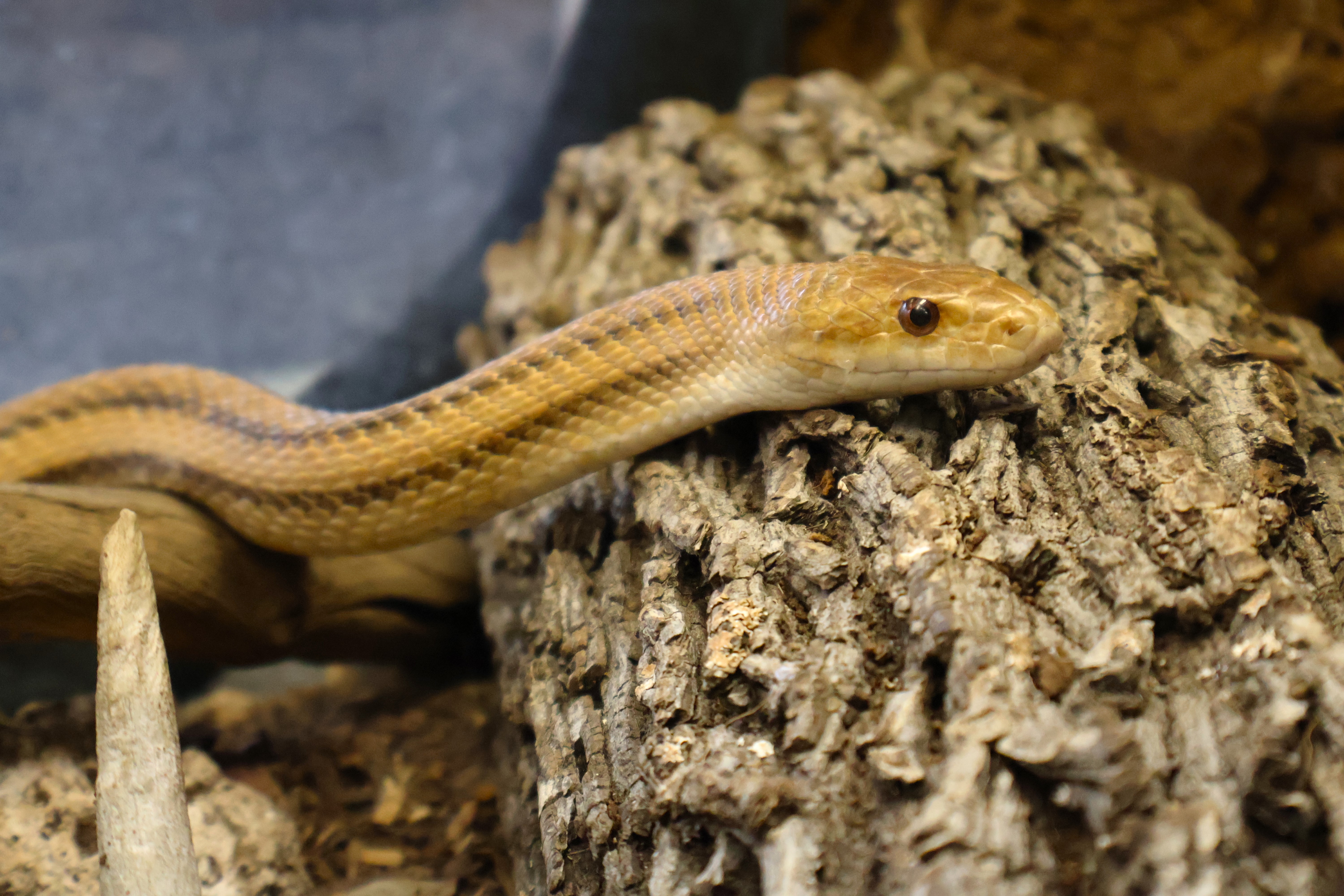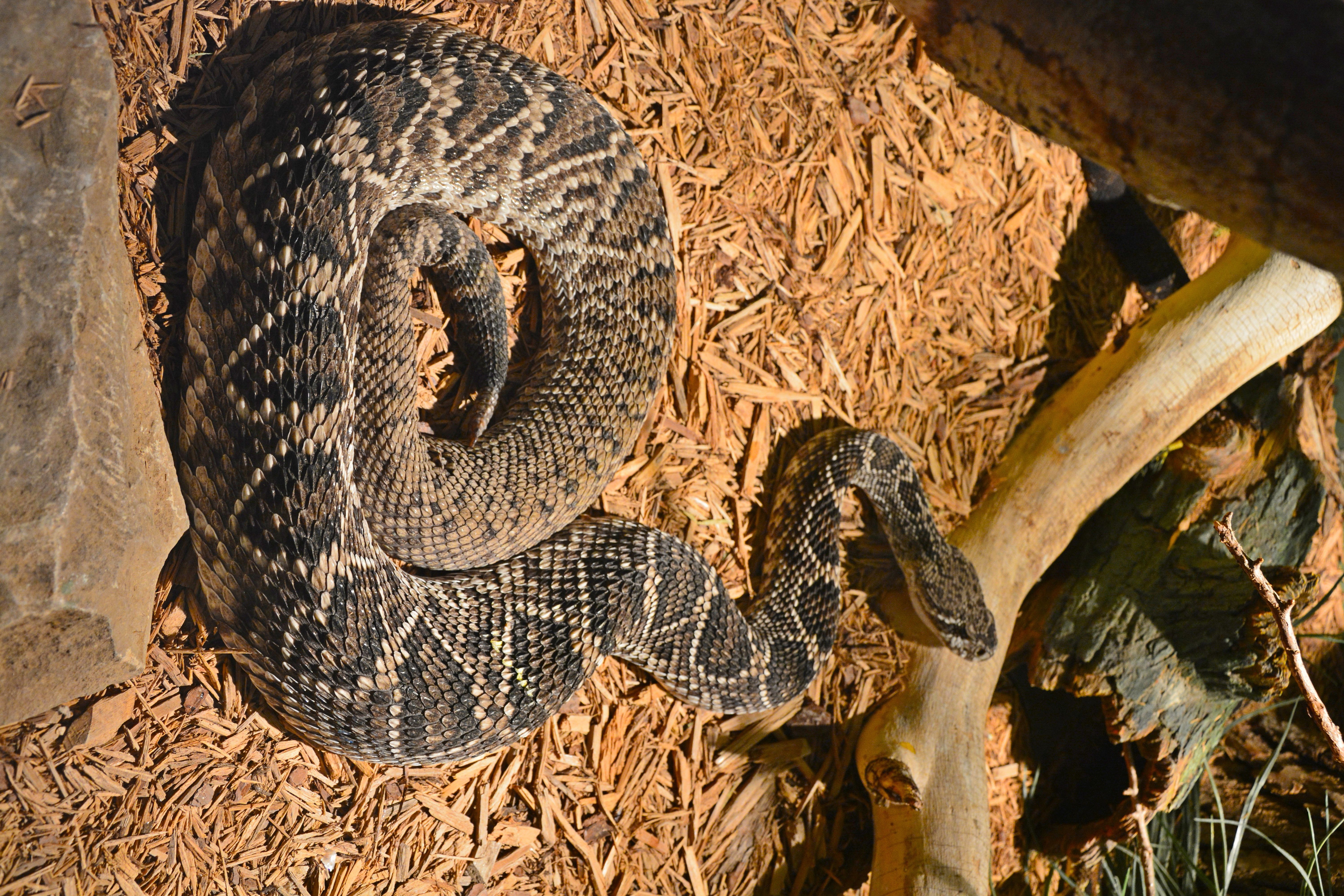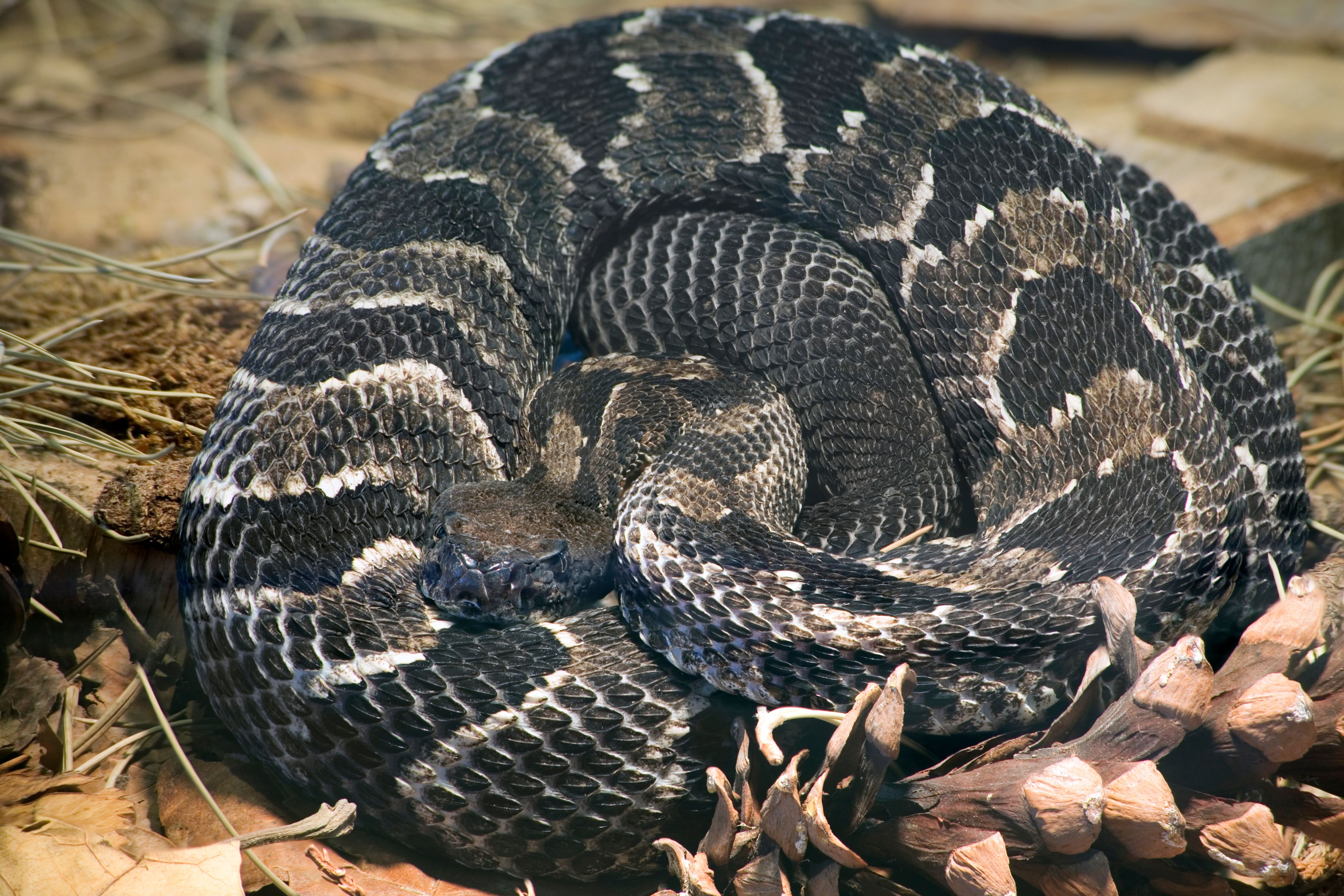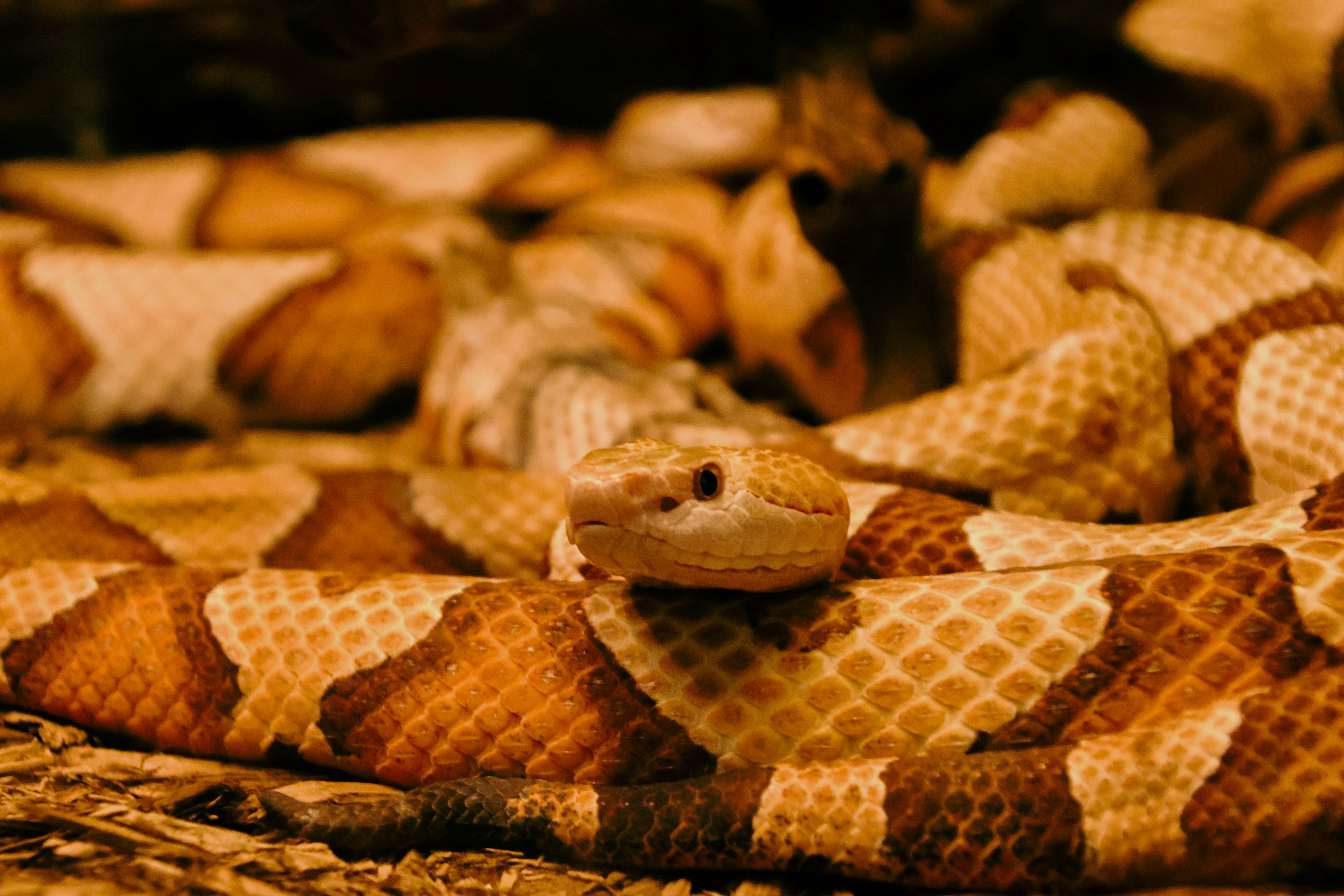
Agkistrodon contortrix
The copperhead is a venomous pit viper native to the eastern and central United States. Named for its distinctive copper-colored head, this snake is recognized by its hourglass-shaped bands that blend seamlessly into leaf litter and forest floors. Copperheads are commonly found in woodlands, rocky hillsides, and even suburban areas where natural habitat overlaps with human development.
According to the International Union for Conservation of Nature (IUCN), the copperhead is currently listed as Least Concern. The species remains widespread across much of its range. However, habitat loss, road mortality, and intentional killing still impact local populations. Because copperheads are often encountered near human communities, education about snake awareness and safe coexistence plays an important role in their conservation. Like many reptiles, copperheads reproduce slowly compared to smaller animals, meaning stable populations depend on healthy habitats and reduced persecution.
Copperheads help control rodent populations, which benefits both ecosystems and human communities. As mid-level predators, they play an important role in maintaining balance within forest and woodland environments. They are also prey for larger animals such as hawks and kingsnakes, making them an important link in the food web.
Did you know?
Their hourglass pattern helps them disappear against fallen leaves.
As pit vipers, they have heat-sensing pits that detect warm-blooded prey.
Copperheads give birth to live young instead of laying eggs.
Young copperheads have bright yellow-tipped tails they wiggle to lure insects and small prey.
Unlike rattlesnakes, copperheads do not have a rattle. They rely on camouflage as their primary defense.